Winter camping offers unique experiences where you can fully immerse yourself in the silence of snow-covered forests and the scent of pine. However, dealing with cold air, snow, and wind requires some fine-tuning. As someone who’s carried my backpack into the mountains every winter for years, I’m sharing the 20 essential tips I wish I’d had on my first trip. Get your notes ready for a safe and unforgettable winter camp!
1. Choose Your Location & Elevation Wisely
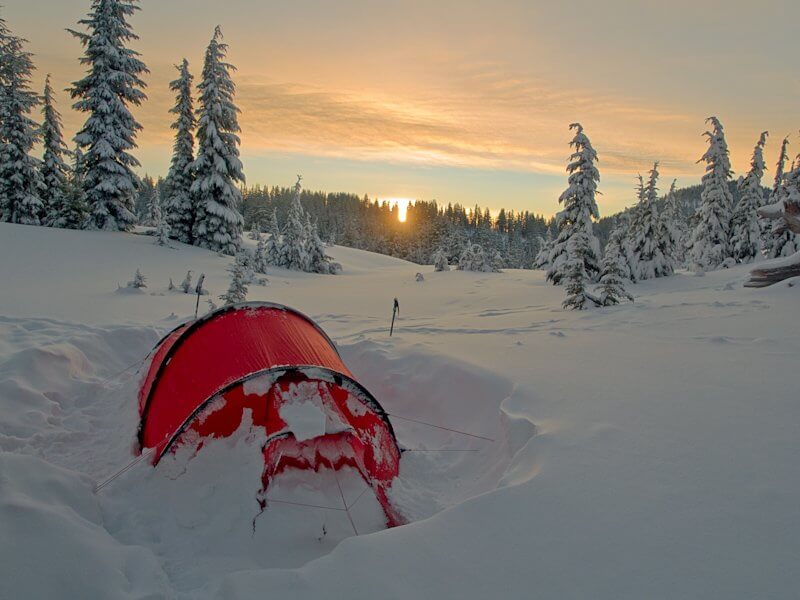
Avoid spots where snow depth and wind intensity vary greatly. Look for shallow depressions behind wind-blocking trees—you’ll get some solar warmth and minimal wind.
2. Monitor Weather Daily

Track temperature, wind speed, and snow alerts. Don’t rely on just one app—check your local meteorological service and a mountain-specific weather source.
3. Embrace Layered Dressing

Use a moisture-wicking base layer, an insulating mid layer (fleece), and a windproof, waterproof shell. Being able to add or remove layers on the go is life-saving.
4. Invest in a Quality Winter Sleeping Bag
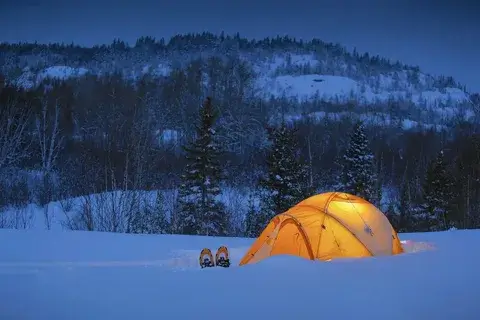
Choose a bag rated to at least –10 °C. Down fill compresses small in your pack and keeps you from freezing.
5. Use an Insulated Sleeping Pad
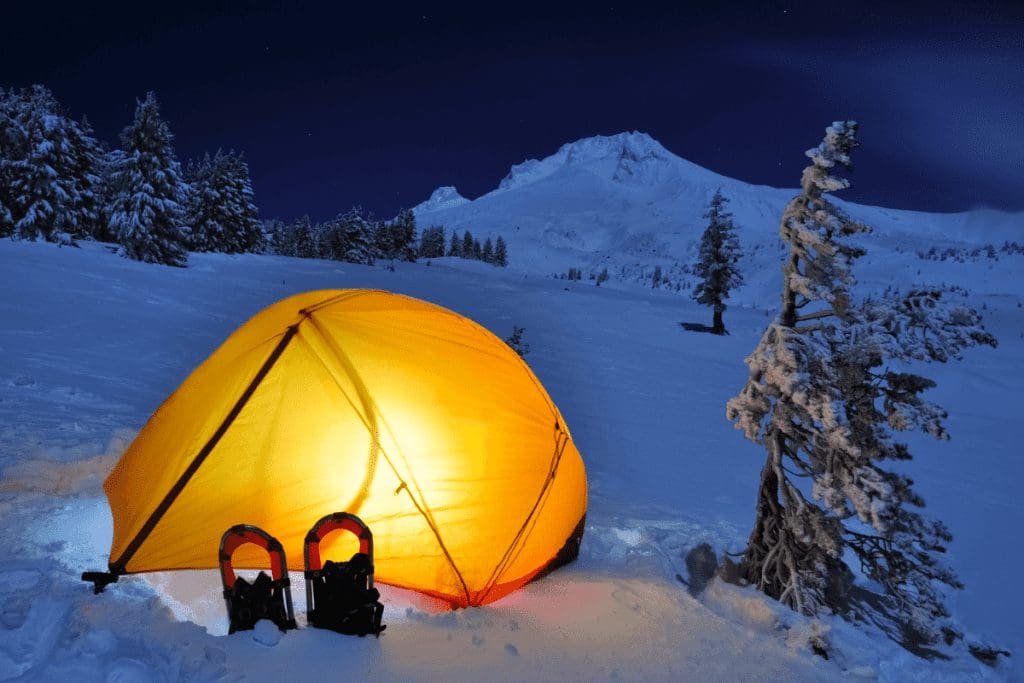
Self-inflating or foam-core pads block ground cold. Frozen soil under the snow can turn your night into a nightmare.
6. Choose a Snow- and Water-Ready Tent
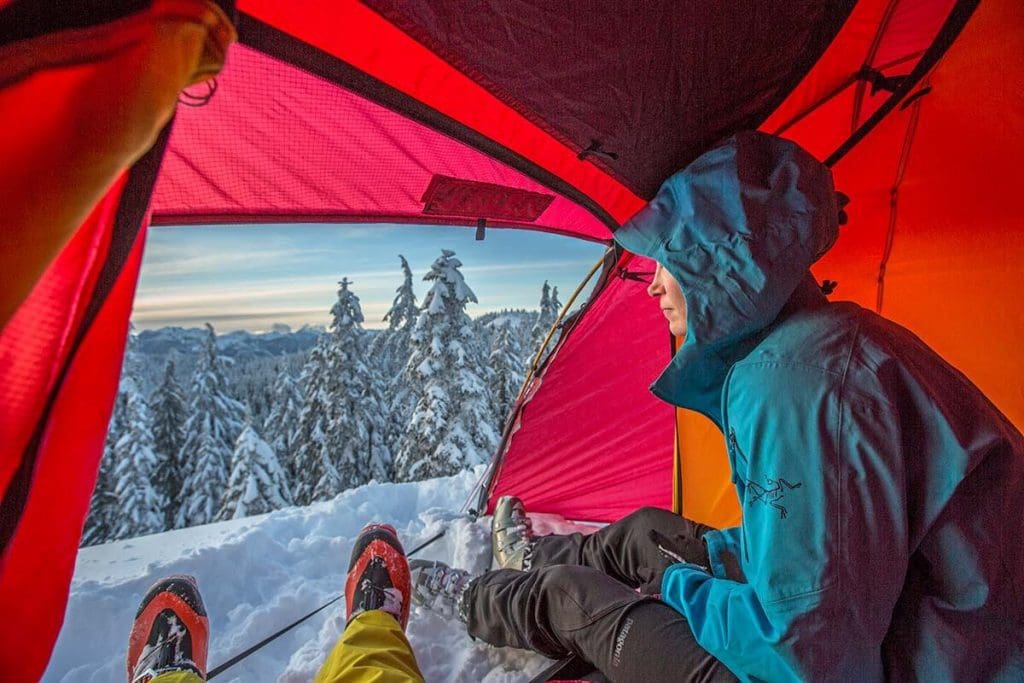
Four-season tents withstand heavy wind and snow load. Add a tarp above to shed snow and keep meltwater from entering your shelter.
7. Keep Your Feet Warm

Layer thick thermal socks → wool socks → waterproof boots. If you feel cold underfoot, move around to boost circulation.
8. Don’t Forget Gloves & Hat

Your hands and head lose heat fastest. Use two-layer gloves (liner + shell) and a hat that fully covers your ears.
9. Protect Against Snow Glare

Snow reflects UV at triple intensity. Use snow goggles or high-UV sunglasses to prevent cheek burns and eye strain. SPF 30+ sunscreen is essential.
10. Stay Warm—Hydrate Often
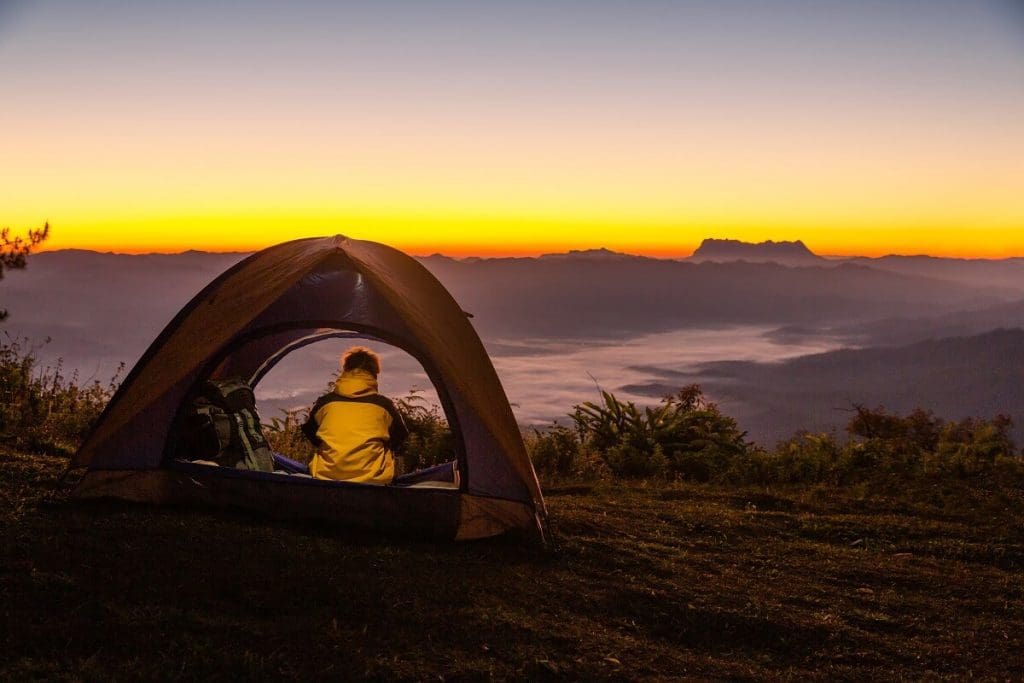
Keep a hot-water bottle and thermos full. Cold drinks chill you; hot beverages warm you from the inside and lift your spirits.
11. Pack High-Energy Foods

Nuts, chocolate, energy bars, instant soup… High-calorie snacks take up little space and stave off hunger pangs.
12. Manage Your Fire Safely

Pre-split firewood into small pieces. Build a “fire bed” of snow beneath your fire to avoid burning the ground’s organic layer.
13. Carry a Snow Shovel & Probe
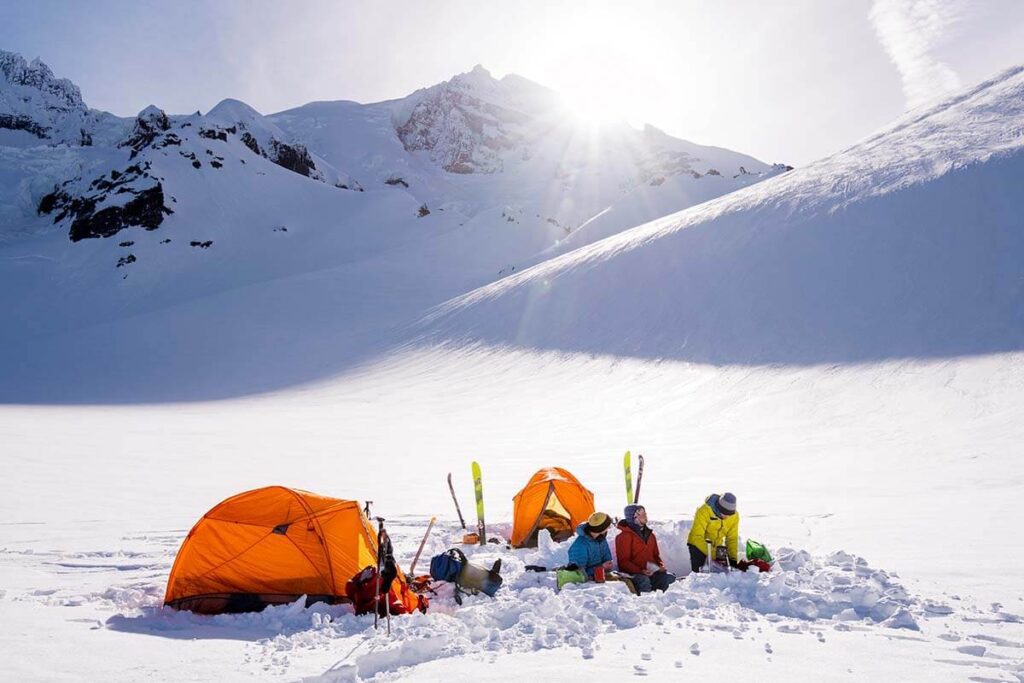
Measuring snow depth and density helps you assess tent collapse risk. A compact shovel also makes digging out platforms and channels easier.
14. Personal First Aid & Emergency Kit

Essential items for hypothermia, cuts, burns, and frostbite: thermal blanket, alcohol pads, and circulation-boosting heat packs.
15. Navigation & Communication Tools

Map, compass, GPS… Expect limited phone signal. Tuck a mini power bank in your sleeping bag pocket along with a headlamp.
16. Light Sources & Spare Batteries

Bring a headlamp + LED flashlight + extra batteries. Make sure your lighting gear is rated for cold and moisture.
17. Dual-Fuel Stove or Alternative Heater

Liquid-fuel stoves work reliably in freezing temperatures. Canister stoves lose efficiency below –5 °C; pack a small alcohol burner as backup.
18. Snowshoes or Crampons
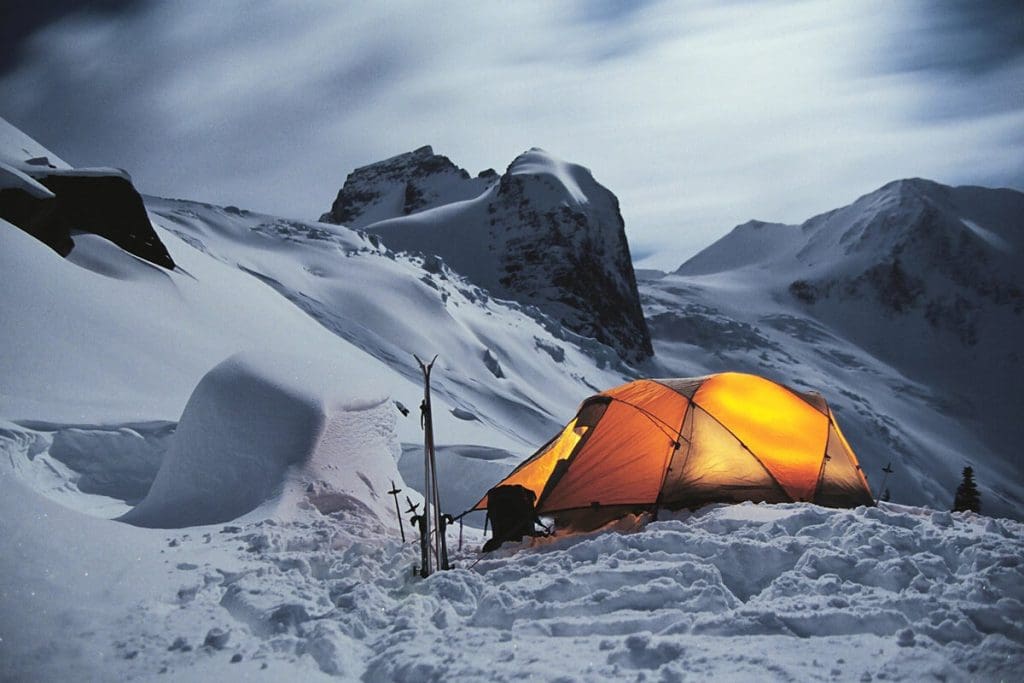
Light crampons or snowshoes prevent slipping and conserve energy on deep snow or icy ground.
19. Ice Axe & Hook
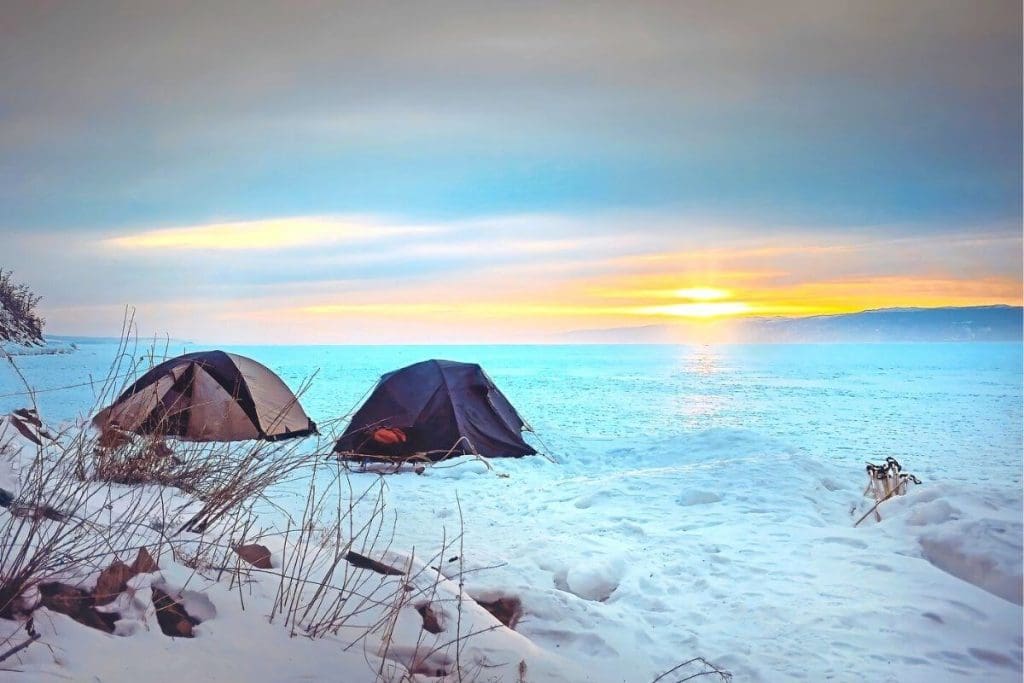
An ice axe is invaluable for leveling a snow platform, testing snow stability, and small excavation tasks.
20. Buddy System & Meeting Point
Solo winter camping can be risky. Check in regularly with your partner and establish a night signal system using a bell or whistle.
With the right preparation, gear, and experience, winter camping becomes an unforgettable adventure. These 20 tips will help you prioritize, boost your survival chances, and enjoy the white wilderness comfortably. It’s time to raise your thermos on the snow and declare “I’m ready!”—happy camping!